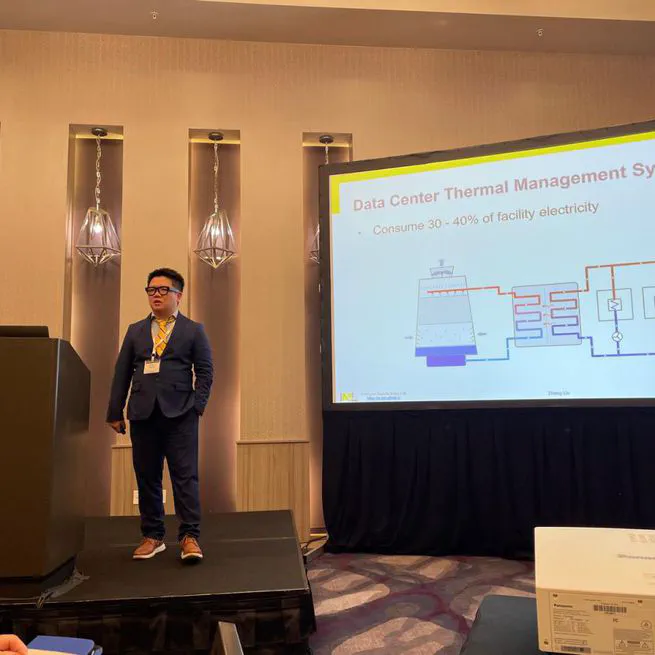
Zheng Liu gave two talks at ITCC & ITES 2026, with support from an ACerS Young Professionals Travel Grant.
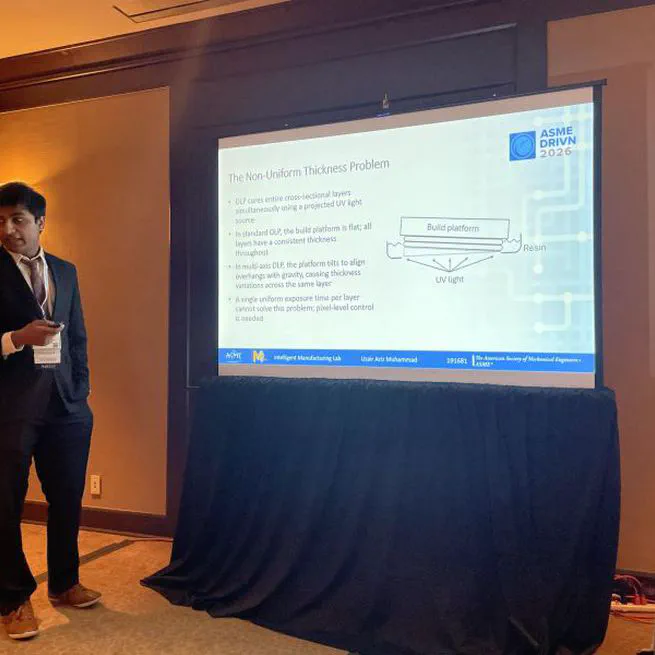
Uzair Aziz Muhammad and Manognya Lokesh Reddy presented research on multi-axis DLP 3D printing and single-image distance estimation at ASME DRIVN 2026.
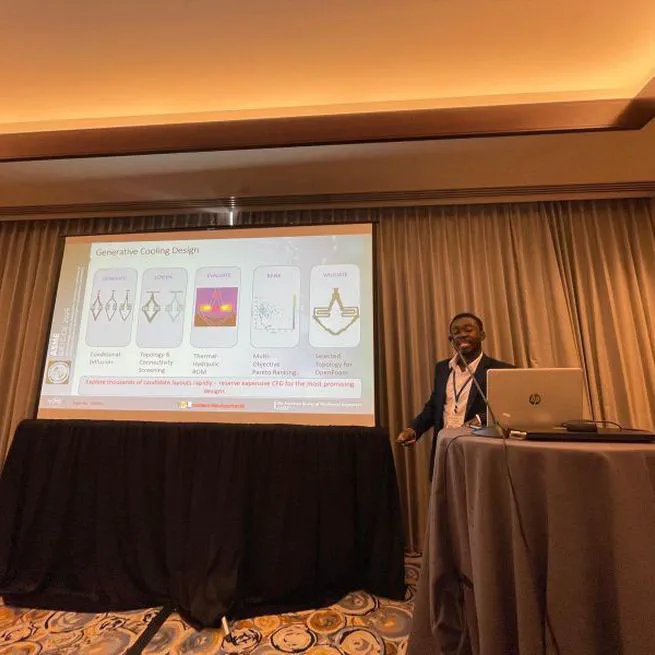
IML presented conference papers and an invited early career research talk at ASME IDETC-CIE in Houston, where Zheng also co-chaired a design resilience session.
IML's digital twin study in the ASME Journal of Engineering for Sustainable Buildings and Cities examines how cooling system design and control affect annual energy use.
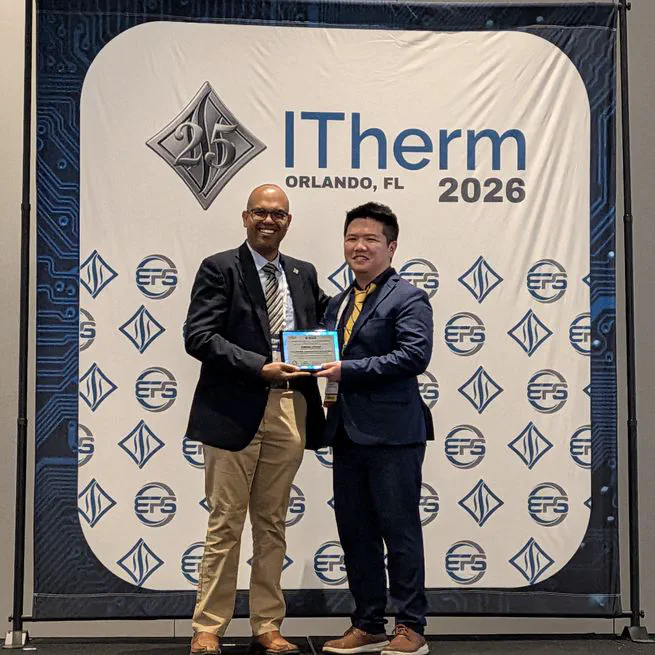
Zheng is absolutely thrilled to share that our paper has won the prestigious Prof. Avram Bar-Cohen Best Paper Award in the Data Centers Thermal Management track at 2026 IEEE ITherm!
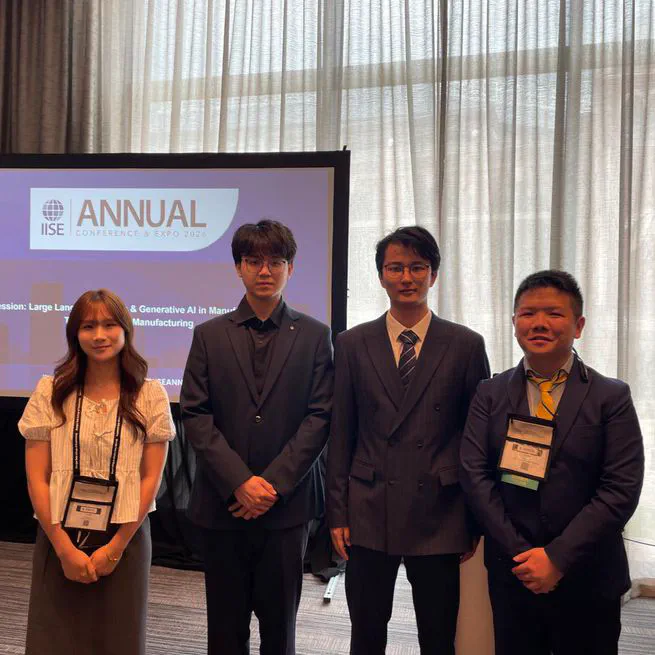
Zheng is incredibly grateful to our outstanding speakers for making our 2026 IISE Annual Conference session “Large Language Models & Generative AI in Manufacturing” (sub-session under Manufacturing & Design track) such a resounding success! Thank you Pengyu Zhang and Linhan Xia for sharing your insights. Your contributions are driving advancements in the application of LLM and GenAI to the most challenging engineering problems. It was a privilege to host this session with Yumin Kang. Looking forward to more opportunities to learn and innovate together!
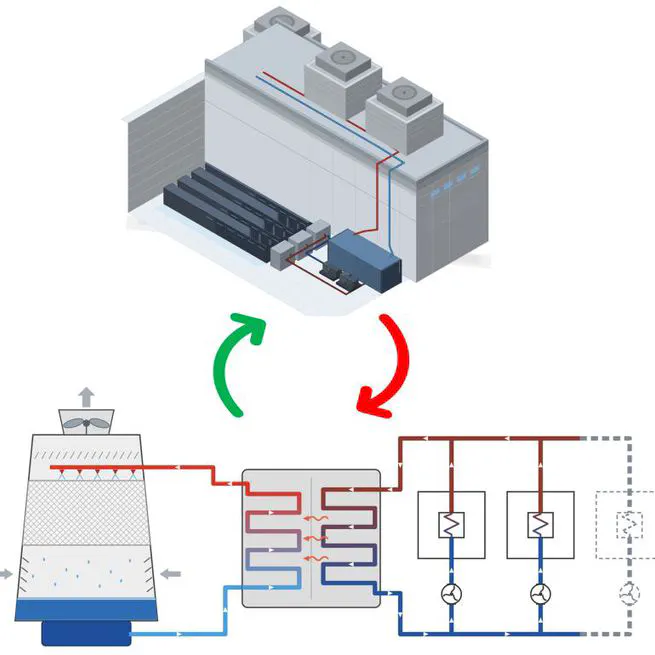
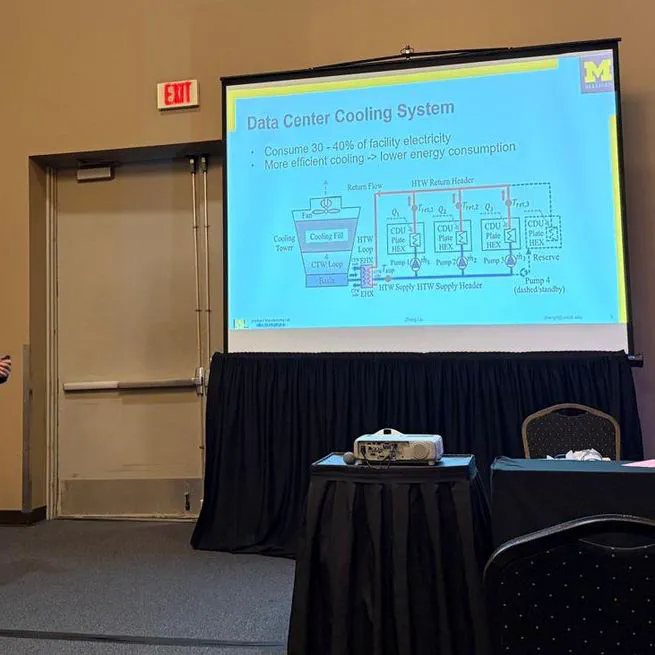
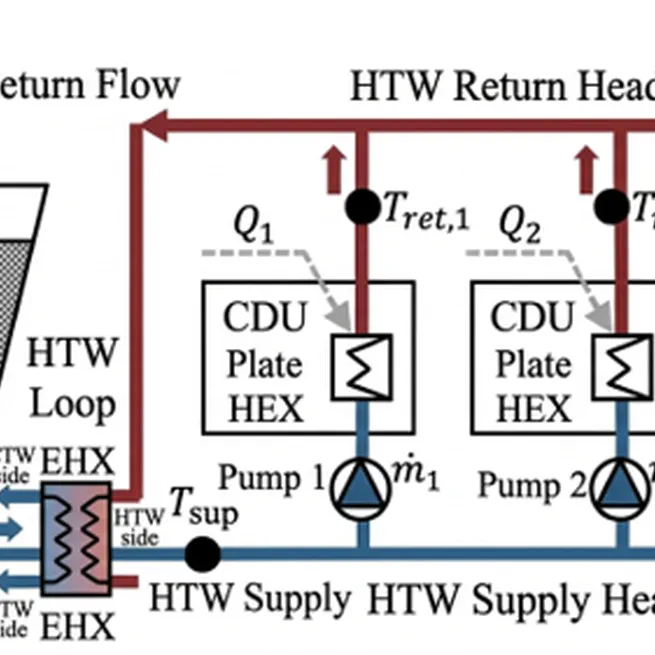
Zheng had a blast giving a talk at the Michigan Energy Efficiency Conference + Exhibition 2026! We discussed how to tackle data center thermal management using AI and digital twins, bridging the gap between theory and practice to achieve real-world energy savings for data centers.
IML is happy to share that Zheng secured his second funding (also as single PI): Physics-Informed Machine Learning for Data Center Cooling Systems Control Co-Design Optimization. IML will be diving deep into the world of data center cooling to push the boundaries of next generation AI infrastructure.
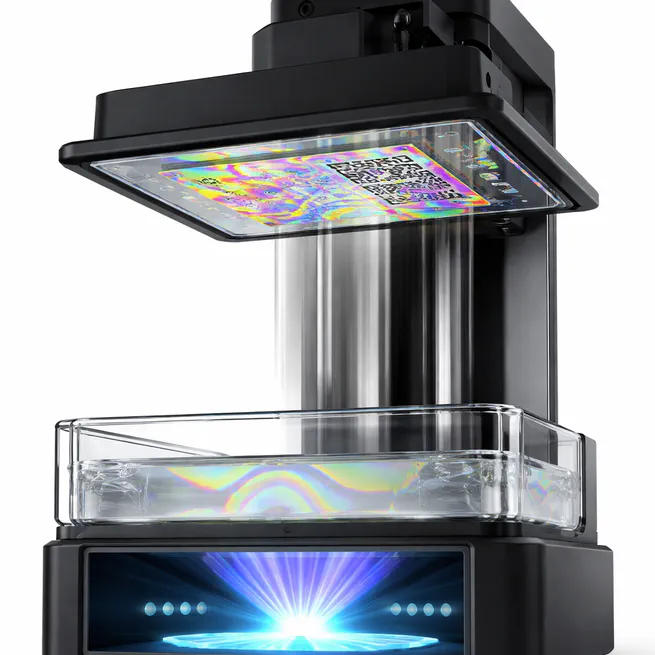
IML is happy to share that Zheng secured his first funding (also as a PI): Digital Light Processing of Passive Visible Light Tags. IML will be diving deep into the world of 3D printed smart tags alongside Professor Xiao Zhang and Professor Jing Tang to push the boundaries of smart manufacturing.
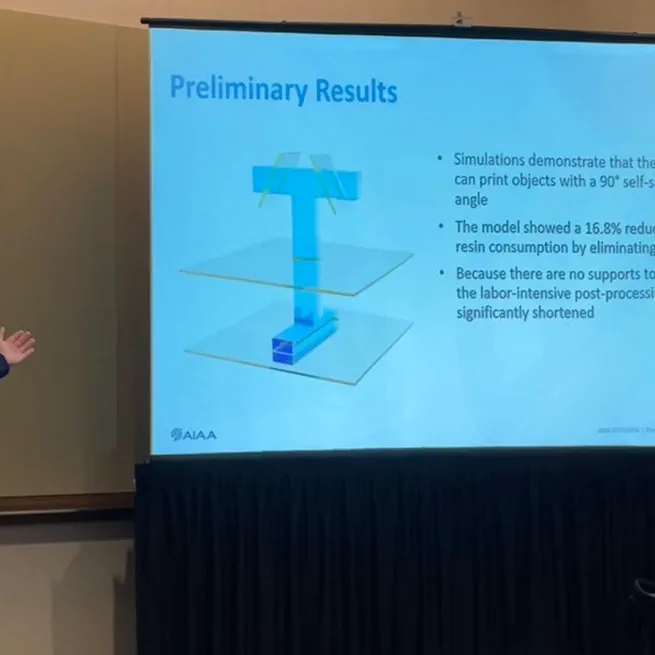
At the 2026 AIAA SciTech conference, Zheng presented Support-Free Additive Manufacturing via Multi-Axis Digital Light Processing, introducing a robotic, multi-axis DLP 3D-printing framework aimed at eliminating sacrificial supports for complex geometries. The approach dynamically reorients the build platform so overhang directions align with the gravity vector, reducing or avoiding support formation but creating new hurdles in non-planar layer generation and projection. To overcome these, Zheng described a modified slicing workflow for non-planar interfaces, paired with a variable layer-thickness strategy that uses pixel-level grayscale modulation to precisely control curing depth. The presentation also detailed a collision-free path-planning method for the submerged vat environment, including safe entry/exit trajectories and compensation for robot repeatability errors. Together, these advances connect multi-axis robot kinematics with vat photopolymerization and were demonstrated to achieve 90° self-supporting structures while saving more than 15% resin.