We connect artificial intelligence, physics-based modeling, and optimization to address engineering challenges in vehicle perception, system health, integrated energy infrastructure, and design under uncertainty. Explore our research areas below and opportunities to develop solutions together.
ADAS
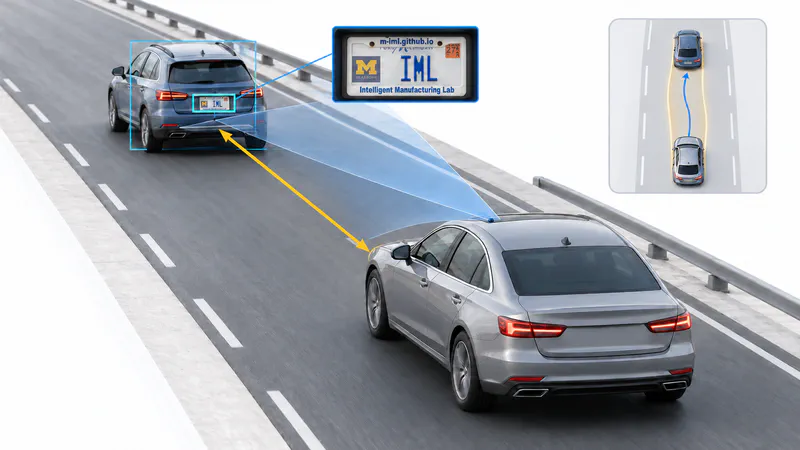
We develop camera-based perception methods for Advanced Driver Assistance Systems (ADAS), with an emphasis on accessible vehicle ranging and physically interpretable estimation. Our research uses standardized license-plate geometry and typography as references for recovering distance from a single camera. Character height, plate outline, and mounting-hole spacing provide complementary measurements, while camera calibration and pose compensation account for viewing geometry. Measurement fusion and temporal filtering help reject inconsistent detections and stabilize estimates across successive frames. We investigate how these methods can support following-distance estimation and provide inputs to collision-warning functions, with attention to measurement uncertainty, image quality, and changes in viewing conditions.
Prognostics and Health Management
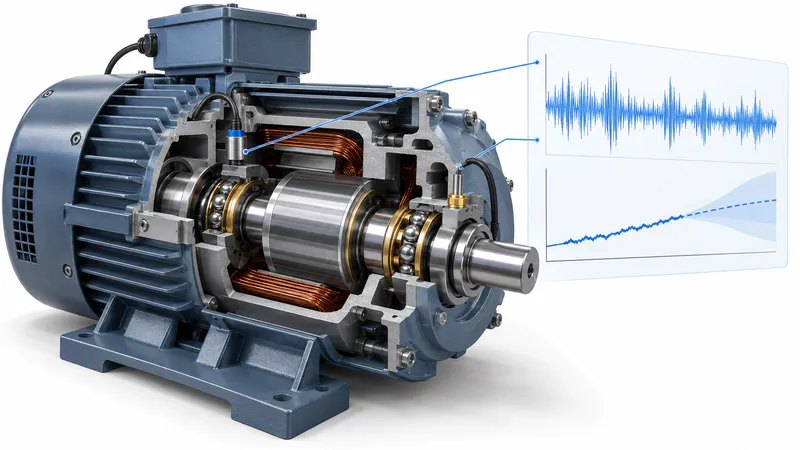
We investigate methods for assessing engineering-system health and anticipating failure when measurements, failure histories, or computational resources are limited. Our work connects transfer learning for Prognostics and Health Management with physics-based simulation and adaptive surrogate modeling for reliability assessment. Transfer learning explores how information from related systems can inform a target application, while surrogate models approximate computationally expensive performance evaluations. Gaussian-process models, adaptive sampling, and Monte Carlo analysis support mean-time-to-failure estimation for systems with multiple components and failure modes. The objective is to translate incomplete information into useful reliability estimates, quantify their uncertainty, and support inspection, maintenance, and design decisions.
Microgrid
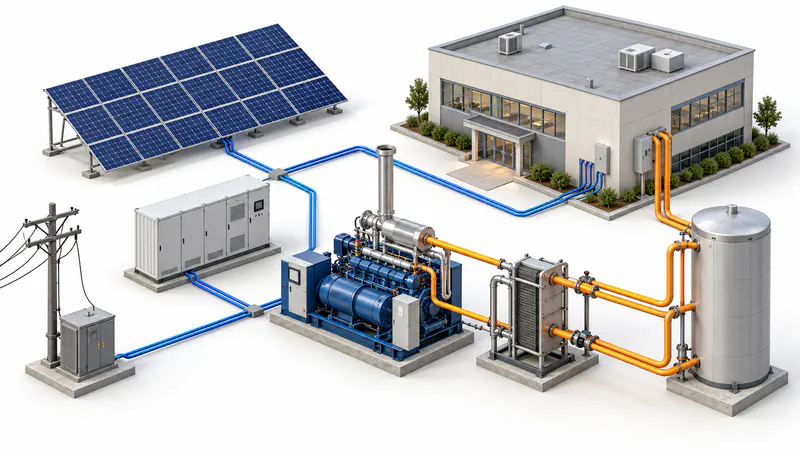
We study the joint design and operation of microgrids that coordinate electricity generation, useful heat, and energy storage. Our work considers combined heat and power units, photovoltaic generation, boilers, heat recovery equipment, and both electrical and thermal storage. A co-design framework connects component sizing with operating decisions, allowing investment choices to reflect how equipment will be scheduled and used. Mixed-integer optimization evaluates installation costs alongside energy production, maintenance, startup, and unmet-load costs. By examining normal operation and disruption scenarios, we investigate trade-offs between economical energy supply and continuity of service. This systems perspective supports planning for integrated energy infrastructure with coupled electrical and thermal demands.
Engineering Solutions
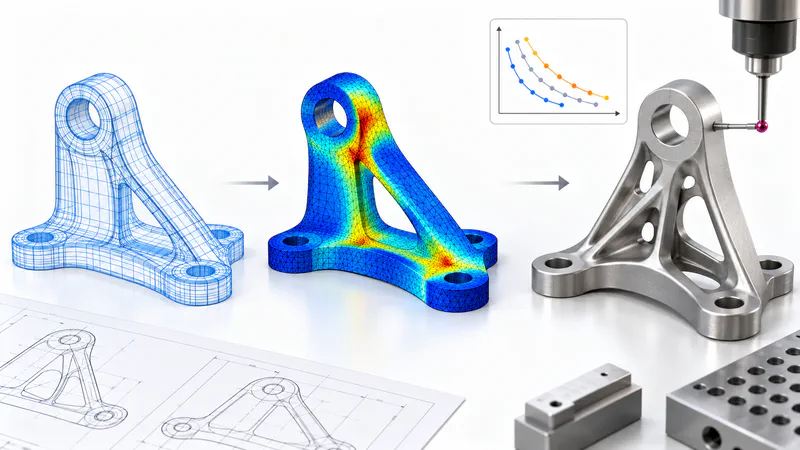
We collaborate on engineering problems that require a close connection between physical understanding, data, and design decisions. Our methods combine multiphysics simulation, machine learning, uncertainty quantification, and optimization to investigate complex systems under practical resource constraints. Multi-fidelity modeling brings together simulations and experiments with different levels of detail, while multi-task learning shares information across related performance measures and constraints. Adaptive sampling directs additional evaluations toward the questions that matter most for a design. These capabilities support reliability-based design, process improvement, and comparison of engineering alternatives. We welcome collaborations guided by clear performance objectives, operating constraints, and available experimental or simulation evidence.
Apr 1, 2026
Mar 1, 2026
Sep 1, 2025
Jan 27, 2025
Jan 1, 2025
Aug 1, 2024
Aug 1, 2024
Dec 1, 2023
Sep 1, 2023
Aug 20, 2023
Aug 20, 2023
Aug 20, 2023
Jul 1, 2023
May 5, 2023