Our AI research focuses on developing advanced machine learning and optimization methodologies for engineering applications. We combine physics-based modeling with data-driven approaches to create intelligent systems that solve complex engineering challenges. Our work spans physics-informed machine learning, generative design, uncertainty quantification, surrogate modeling, and engineering design optimization, enabling breakthroughs across diverse domains including energy storage, manufacturing, and thermal management.
Physics-Informed Machine Learning
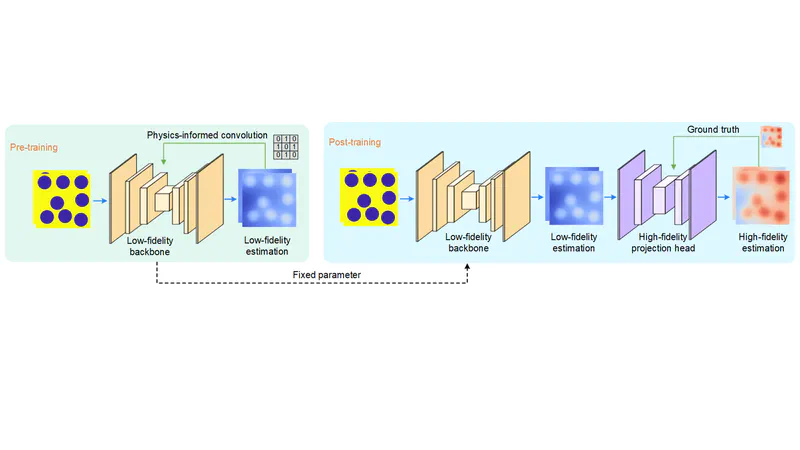
We develop physics-informed machine learning models that integrate physical laws and constraints with neural networks to enable accurate predictions while respecting fundamental conservation principles. Our research includes multi-fidelity physics-informed convolutional neural networks for thermal prediction, physics-informed neural networks for battery pack temperature estimation, and hybrid approaches that combine experimental data with physics-based models.
Generative Design
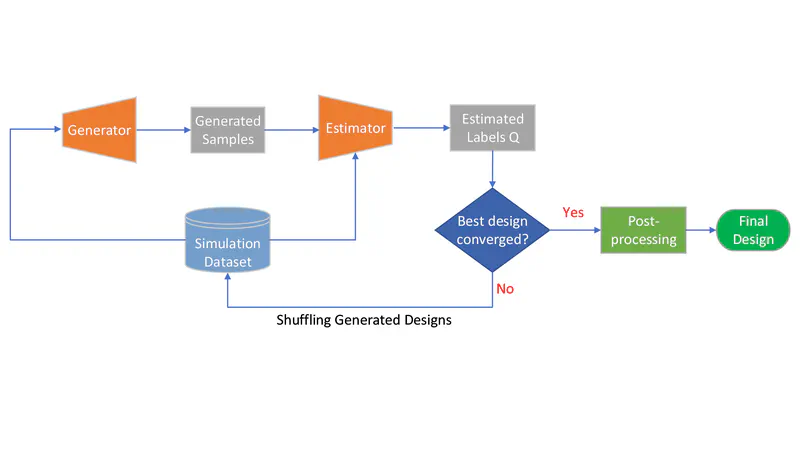
We leverage generative AI and diffusion models to explore novel design configurations and discover innovative solutions. Our generative design approaches enable rapid exploration of design spaces, automatic generation of optimal geometries, and discovery of previously unexplored design topologies for applications ranging from battery thermal management to cellular structures.
Uncertainty Quantification
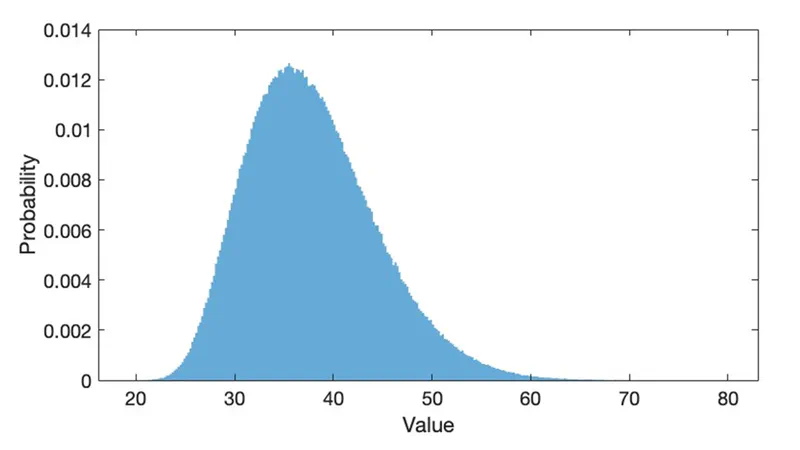
We develop advanced uncertainty quantification methods to assess and propagate uncertainties in engineering systems. Our research includes statistical shape modeling, probabilistic frameworks for design under uncertainty, and multi-fidelity approaches that combine high and low-fidelity information sources to quantify and reduce uncertainty in engineering predictions.
Surrogate Modeling
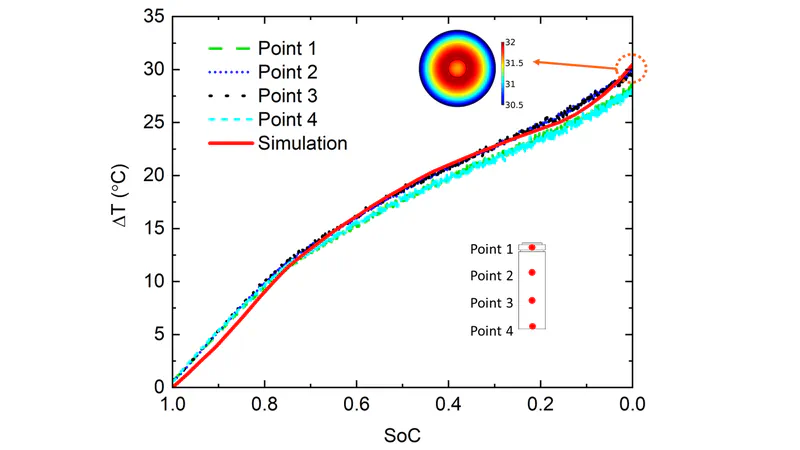
We create efficient surrogate models and machine learning-based approximations that replace computationally expensive simulations with fast and accurate predictions. Our research includes adaptive surrogate modeling, multi-fidelity surrogate models, and transfer learning approaches that enable rapid design exploration and optimization while maintaining accuracy.
Engineering Design Optimization
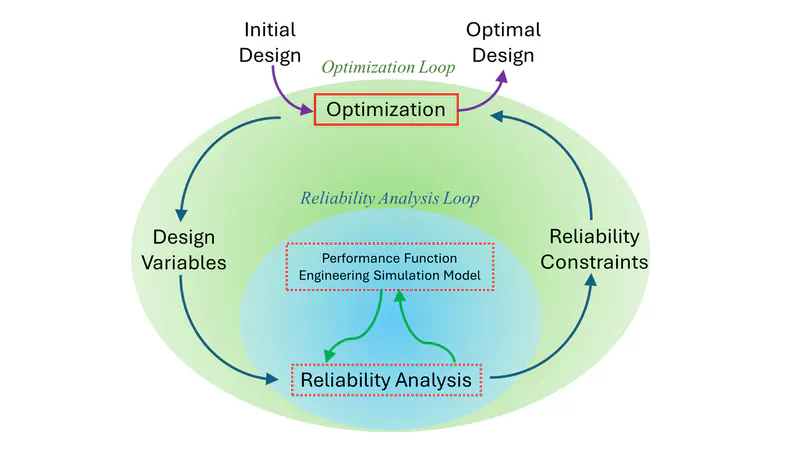
We develop optimization frameworks that combine AI, physics-based modeling, and engineering constraints to solve complex design problems. Our research includes reliability-based design optimization, control co-design optimization, multi-objective optimization, and multi-task learning approaches that simultaneously optimize multiple design objectives and constraints.
Jul 14, 2026
Jul 1, 2026
Jul 1, 2026
Jul 1, 2026
Jun 22, 2026
Jun 13, 2026
May 1, 2026
May 1, 2026
Apr 1, 2026
Apr 1, 2026
Apr 1, 2026
Apr 1, 2026
Mar 1, 2026
Mar 1, 2026
Jan 12, 2026
Jan 1, 2026
Jan 1, 2026
Dec 1, 2025
Sep 1, 2025
Sep 1, 2025
Aug 1, 2025
Jun 18, 2025
Apr 1, 2025
Jan 27, 2025
Jan 27, 2025
Jan 10, 2025
Jan 1, 2025
Jan 1, 2025
Sep 1, 2024
Aug 25, 2024
Aug 1, 2024
Aug 1, 2024
Jul 14, 2024
Dec 1, 2023
Oct 29, 2023
Oct 1, 2023
Sep 1, 2023
Aug 20, 2023
Aug 20, 2023
Aug 20, 2023
Aug 20, 2023
Jul 1, 2023
Jun 21, 2023
Jun 21, 2023
May 5, 2023
Aug 14, 2022
Jun 15, 2022
Feb 1, 2022
Jan 1, 2022
Nov 1, 2021
Jul 23, 2021
Jan 1, 2021
Jun 1, 2020
Dec 31, 2019